Print Marketing Materials: Best Practices for Design and Production
Best practices for print marketing materials, including design, file preparation, paper selection, finishing, proofing and print production.
How a design looks on screen doesn’t always translate to print. Simple mistakes might be invisible in a digital file, but lead to a pixelated, mis-colored mess in the real world. Fortunately, you aren’t stuck just hoping and praying for a good result. This article will serve as your practical guide to print optimization for marketing materials.
Design With the Finished Print Piece in Mind
Understanding how you want the final piece to look, feel, and perform is the first step in successful print design. Specifically, this requires you to decide:
- Who the piece will target
- How the piece will be distributed
- What content the piece will cover
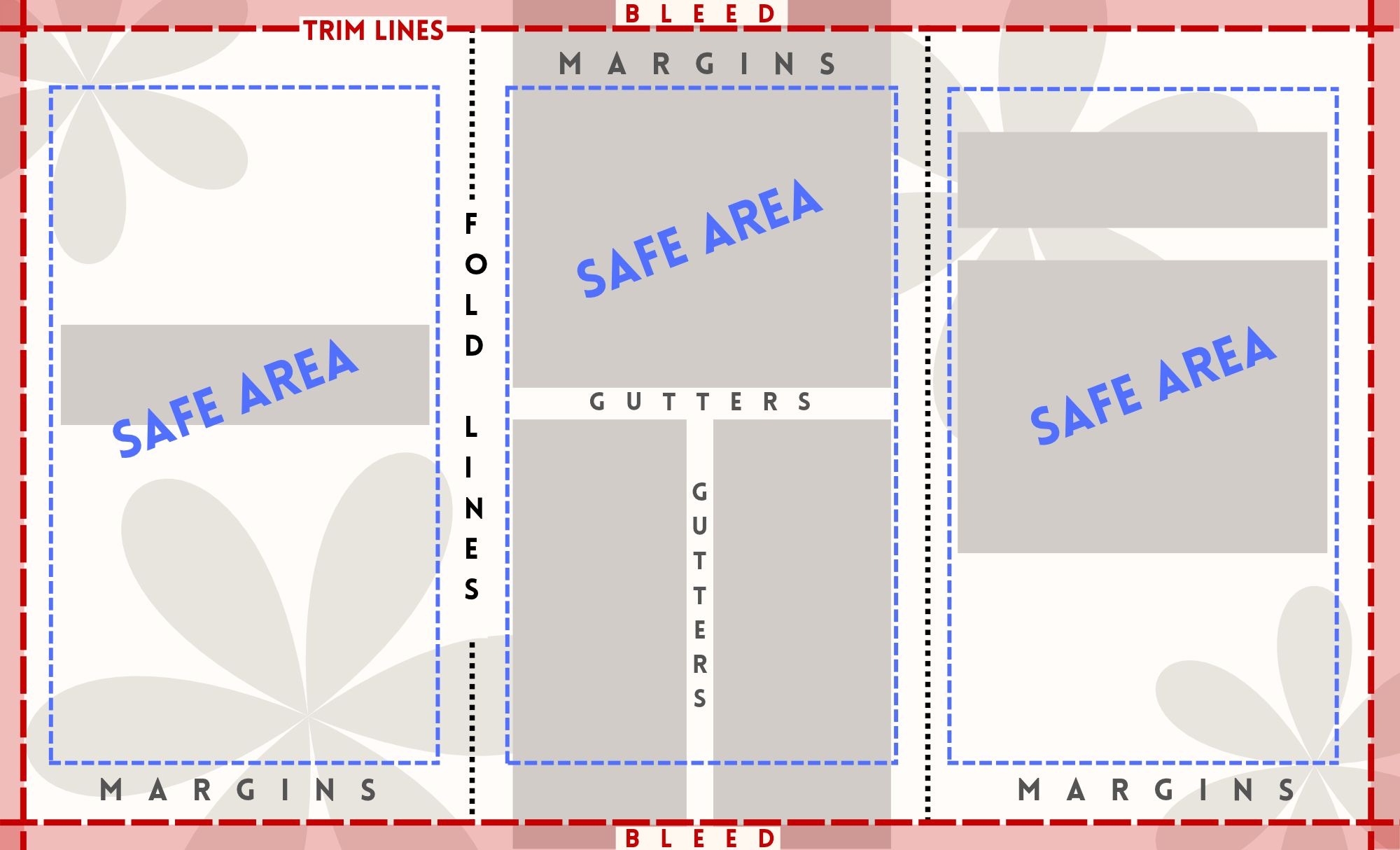
- What the shape, dimensions, folds, and page count will be
- What amount of negative space (margins, gutters, etc.) you want to maintain
- Which parts of your imagery and design elements, if any, will require a bleed
- Whether or not the piece will be bound, and if so what style of binding will be used
Next, when you’re setting up your design file, ensure it’s formatted correctly for printing. This means:
- Setting the color mode to CMYK
- Saving the file in a raster or vector format, as appropriate
- Choosing imagery with a resolution of DPI 300 or higher
For Example: A tri-fold brochure needs to be designed around its folds, with sufficient gutter space between the key information on each panel. If you try to simply lay everything out flat and adjust later, it will be significantly more challenging to achieve the right balance in your design.
Choose Paper and Finishes Based on How the Piece Will be Used
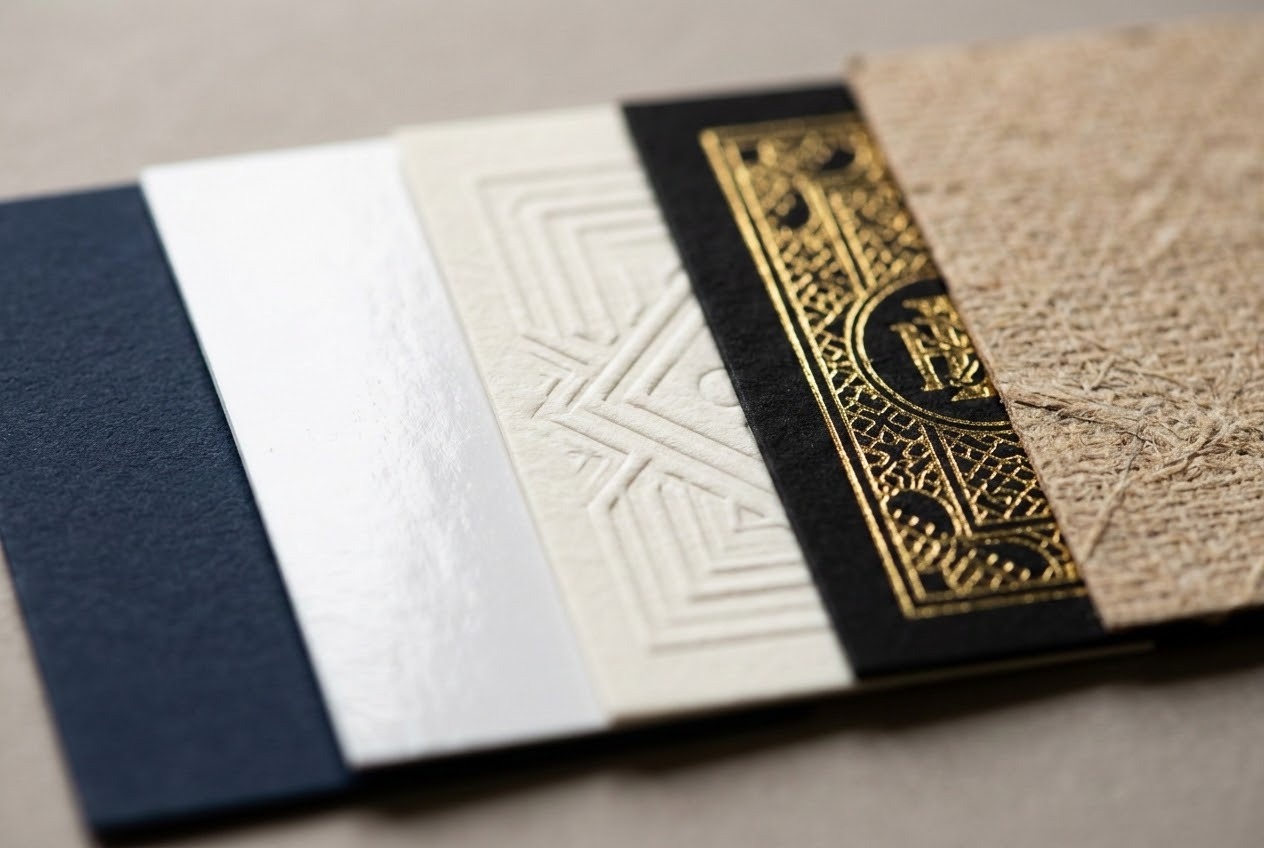
The more intensively a piece of collateral will be used, the more durable it needs to be. Save more delicate paper stocks and expensive finishes for materials that won’t be knocking around in a backpack or sent unprotected through the mail. For example:
- Brochures and sell sheets are often carried in bulk and directly marked up during sales meetings. Sturdy, lightweight papers and finishes that allow for easy writing and/or highlighting are ideal.
- For long catalogs, you can choose a strong paper or cardstock for the covers, then reduce bulk with a lighter weight paper for the pages.
- For presentation or event booklets, a thicker substrate can help lend gravitas to the occasion, especially when you use textural details like linen paper.
- Pocket folders are best made with durable card stock to ensure they hold up to repeated handling while being easy to open and close.
- Direct mail demands very strong papers, capable of resisting scratches, scuffs, bending, tearing, and moisture damage.
Use Finishes With a Purpose:
Of course, paper is only part of the materials equation. Finishes are usually what catch the eye and impress the viewer. But they also need to be evaluated for their durability and impact.
- Matte and gloss coatings come in a variety of formulations. This means you can customize them to the exact right sheen, thickness, and level of protection for a given piece of collateral.
- Foil helps draw the viewer’s eye and call attention to key information. It generally has excellent durability on its own. But, if you want to guarantee it will hold up under rough conditions, you can pair it with a protective coating.
- Embossing and debossing create raised or depressed designs on the paper. These techniques can be paired with foil to elevate the perceived value and prestige of a piece. However, they’re best reserved for use on thicker substrates and for pieces that won’t be subject to extremely rough handling.
Proof Everything Before Production
Finally, reserve adequate time for proofing your prints prior to sending them off. Your printer will do what they can to catch errors on their end, but it’s ultimately up to you to ensure your content is accurate. Check out our Prepress Checklist for a comprehensive rundown of the proofing process.
If you’re ever in doubt, don’t hesitate to reach out to our team at Wallace Carlson Printing. After doing this for nearly a century, we’re confident that we can help you out with just about anything. Just be ready to love the results of our work together.
Conclusion
Work that stands out across time and industries
Looking for more insights on print marketing and design? Check out the latest blogs from Wallace Carlson for expert tips, industry trends, and strategies to elevate your brand.