Marketing Collateral Printing: How to Create Print Materials That Support Sales
Learn how marketing collateral printing can support your sales team with professional, consistent materials designed for every stage of the customer journey.
Too many are tempted to think of marketing collateral as old hat. Run of the mill. Table stakes. But adopting such a blasé stance risks missing your chance to capitalize on one of the most effective marketing channels, period. Of course, it takes a bit of thought and precision to ensure you develop the right pieces for the right purposes. But once your sales team is armed with a complete suite of high quality print assets, you’ll start seeing the results - better informed prospects making faster, more confident decisions.
Match Your Marketing Collateral to the Sales Journey
The basic trick to developing successful marketing collateral is to think of it as building a toolkit. As the saying goes, ‘if you only have a hammer, everything looks like a nail’. The same is true for print marketing. If you try to educate, sell, promote, and build relationships all with the same piece of collateral, you’re setting your team up to struggle with an ill-suited tool.
But how to choose the right tools for your work? First off, you need to know what kinds of tools are available. So let’s look at how different types of collateral can work at different stages of the customer/client journey.
Building Awareness and Starting Conversations
During this phase, your priority is education and reputation building. There are two main types of prints that help during this phase - quick informative pieces and enduring giveaways.
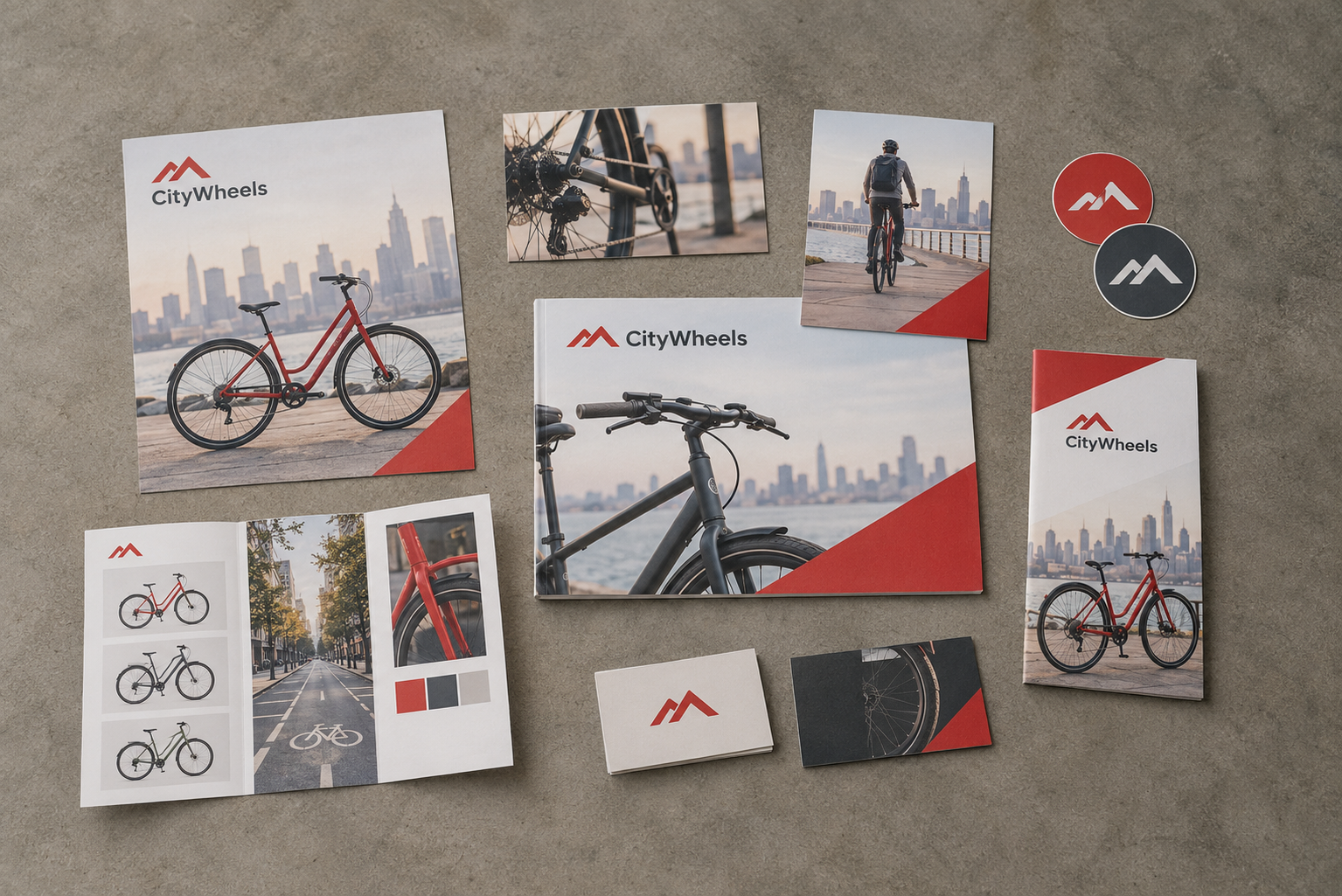
Quick informative pieces include:
- Brochures
- Postcards
- Flyers
These may be handed over in-person at meetings, events, and trade shows. Or they may be distributed (and personalized) via direct mail. Either way, the goal is to succinctly introduce the recipient to what your brand offers, then tell them how they can learn more. And while this kind of collateral needs to look compelling, above all it needs to explain your value proposition, fast. Avoid getting too detailed in these pieces, so as not to overwhelm or confuse customers early in their journey.
As for enduring giveaways, these may include:
- Business cards
- Stickers
- Branded notepads
- Branded calendars
Typically, these items are given out in-person. Their aim is to impress first, then linger in the recipient’s possession thanks to their attractiveness, durability, and/or utility. The longer they last, the more touchpoints you get with that customer, and the more likely they are to take the next step.
Supporting Sales Conversations
Once the sales conversation has started in earnest, the goal of print collateral is to provide easy, immediate references for both the sales rep and the customer. Materials suited to this purpose include:
- Sell sheets
- Product catalogs
- Pocket folders and sales kits
- Case studies
- Product/service comparison materials
With these materials your sales team can literally highlight the information most relevant to the customer, helping them to stay focused on the strongest parts of your sales pitch. They can also provide longer-form information, giving customers something to consume on their own time that a sales rep can follow-up on in future discussions.
Helping Customers Make a Decision
Finally, there are marketing materials that help close the deal. These pieces provide granular, specific information that an already well-informed customer wants before they make their decision. Examples include:
- Product specifications
- Pricing and product guides
- Presentation materials
- Custom proposals and leave behinds
Providing these detailed resources in hardcopy helps customers literally keep an eye on your offer as they compare and choose. Print also lends itself well to in-person decision making among multiple parties by making your solutions feel more tangible and on-hand.
Design Marketing Collateral for How Salespeople Actually Use It
Once you know what types of materials you want to develop for your marketing collateral toolkit, the next step is to design those materials for maximum success. For this, it’s important to keep in mind how an effective in-person sales pitch typically goes.
For example, scanability is key. Especially in the early stages of the sales journey. So make sure you design has clear information hierarchy by:
- Using only one primary header/title per piece
- Using secondary and tertiary headers to organize information by subject
- Using bullet points to clearly delineate lists of products, features, customizations, etc.
It’s also important to make text and images easy to understand and digest. That means:
- Using only high-resolution imagery
- Choosing a sufficiently large font size
- Using a single font across the entire document.
- Maintaining sufficient gutters and margins.
As for the substance of your content, keep your copy succinct and focused on information that will help your sales team demonstrate they understand your customers’ needs and why choosing your solutions offers a distinct advantage. Remember to also include clear, concrete calls to action, such as directing folks to visit your website or contact their sales rep directly.
Finally, remember to keep things practical. The dimensions and durability of each piece of collateral should match the methods that will be used to distribute it. That means tough, damage-resistant designs for direct mail, or close-packing, easy-to-ship designs for pieces meant to be handed out en masse at trade shows. And keep in touch with your sales team. Ask them what’s working and what’s not, and don’t be afraid to retire outdated collateral when it stops pulling its weight.
Interested in talking to a pro about building up your print collateral toolkit? Just ask the Wallace Carlson Team how we can help you market more effectively.
Conclusion
Work that stands out across time and industries
Looking for more insights on print marketing and design? Check out the latest blogs from Wallace Carlson for expert tips, industry trends, and strategies to elevate your brand.