How Eco-Friendly Inks and Papers Impact Print Quality
Eco-friendly inks and papers deliver strong color, durability, and premium feel—learn how sustainable materials impact print quality and performance.
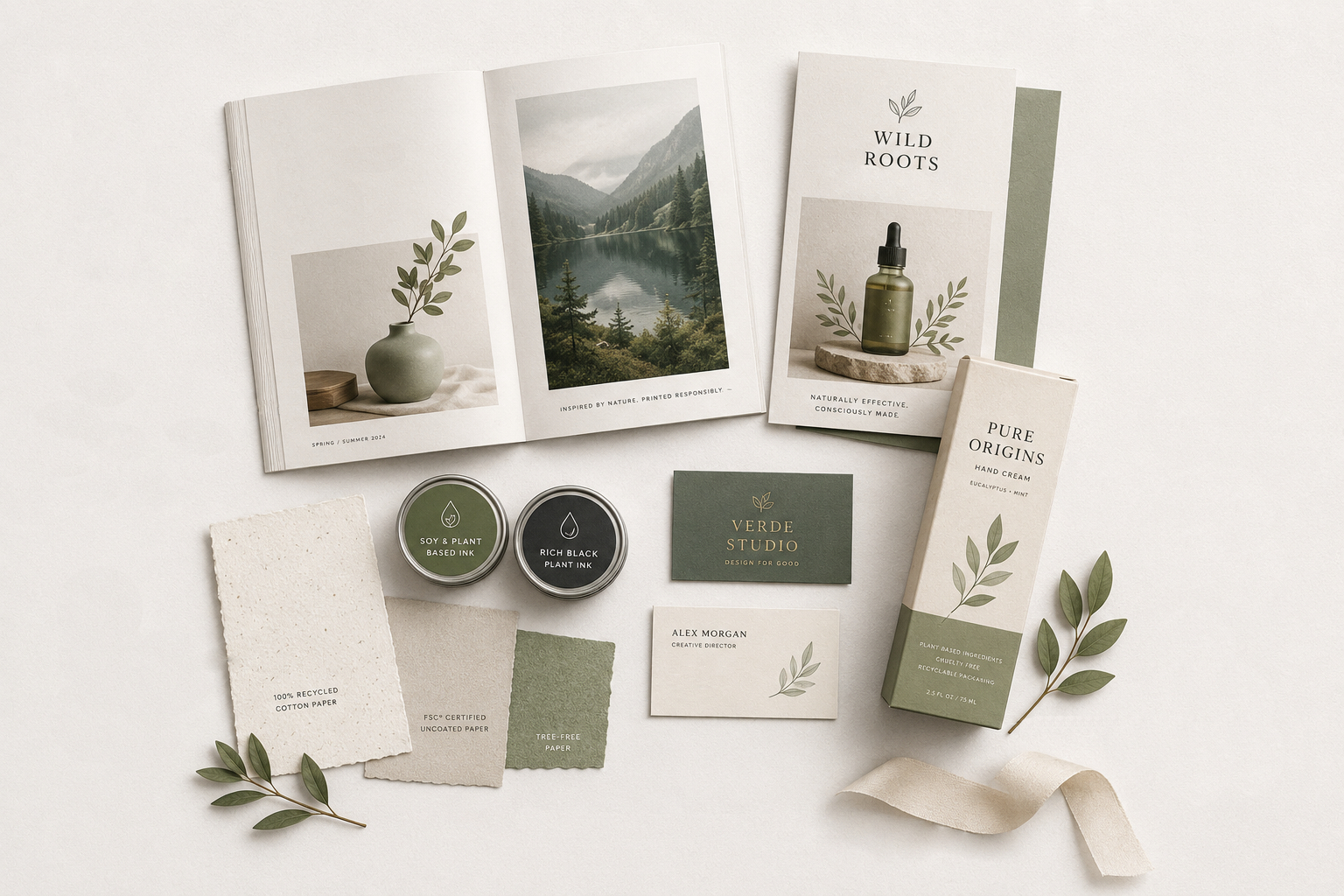
Today’s eco-friendly printing materials bring some historic misconceptions with them, born from the early days when their formulations were still a work in progress. Early soy-based inks, for example, were frustratingly slow drying and less pigmented than standard petroleum inks. And the early sustainable papers tended to be rough textured, thick, and prone to impurities.
But how have things changed in the decades since their introduction?
Well, there’s excellent news on that front. Modern eco-friendly print and packaging materials have now improved to the point where they can be virtually indistinguishable from their top-of-the-line traditional counterparts. To prove it, this blog will delve into the nitty gritty of what defines ‘quality’ in print materials, and examine how eco-friendly papers and inks can exceede the most exacting standards at every turn.
Do Eco-Friendly Materials Compromise Quality?
Short answer: No.
Long answer: You can find commercial papers and inks of every quality level, both sustainable and traditional. Ultimately, the quality of your prints and packaging hinges on choosing the right materials and printing processes. Finding what’s right for your project among sustainable options is just a matter of understanding what’s out there.
How Well Do Eco-Friendly Printer Inks Perform?
Like we mentioned at the start of this blog, soy and other vegetable based inks earned an early reputation for being slow drying and less pigmented than their petroleum-based counterparts. However, modern vegetable based inks have thoroughly overcome these early challenges. They now offer exceptional color vibrancy and consistency, often surpassing traditional inks.
But what exactly makes vegetable inks more eco-friendly? While many vegetable inks still contain some percentage of petroleum oil, the other portion comes from renewable plant-based oil. This substitution reduces a print’s environmental footprint in two ways. First, it cuts the amount of non-renewable fossil fuels required to make each print. And second, it cuts the amount of Volatile Organic Compounds (VOCs) that are released into the environment during production.
How Sustainable Papers Affect Look and Feel
Today, sustainable printing projects can choose between an enormous variety of recycled fibers, tree friendly alternatives, and FSC-certified papers. This variety covers all the finishes, weights, and colors that are available with traditional papers, allowing for indistinguishable substitution of sustainable papers for traditional ones.
However, there is also something to be said for a classically ‘eco-friendly’ aesthetic, with papers that offer a more organic texture and natural colors. Fortunately, these classic types of sustainable papers are also very much still available, and remain a popular choice for brands that want to communicate sustainability as a prominent value.
Choosing the Right Materials for Your Project
Choosing quality eco-friendly printing solutions for your project starts with defining your goals. How should the print look, feel, and perform? Who is receiving it, and what do you want them to take away from it? While some sustainable options may be virtually indistinguishable for traditional luxury papers and inks, that may not be the right effect for a project that’s meant to feel earthy, organic, or rough-hewn.
In other words, the definition of ‘quality’ will vary from job to job. What remains constant is the fact that sustainability and quality are not mutually exclusive. A great print partner like Wallace Carlson can help you find excellent sustainable options, no matter your criteria. And all it takes to get started is reaching out today.
Conclusion
The truth is, more eco-friendly commercial printing is easy these days. All it takes is finding a printer with the right resources, skills, and sustainability practices. A partner like Wallace Carlson, for example. We regularly reflect on our processes to look for opportunities to improve energy efficiency and minimize waste. And we make certain that our sustainability-minded clients always have cost-effective, modern methods and materials to choose from, resulting in prints and packaging that are fully in line with both brand values and brand aesthetics. Ready to start your next sustainable print project? We’d love to hear from you!
Work that stands out across time and industries
Looking for more insights on print marketing and design? Check out the latest blogs from Wallace Carlson for expert tips, industry trends, and strategies to elevate your brand.