Sustainable Printing Solutions for Eco-Conscious Brands
Sustainable printing combines eco-friendly materials, efficient processes, and waste reduction to help brands lower impact without sacrificing quality.
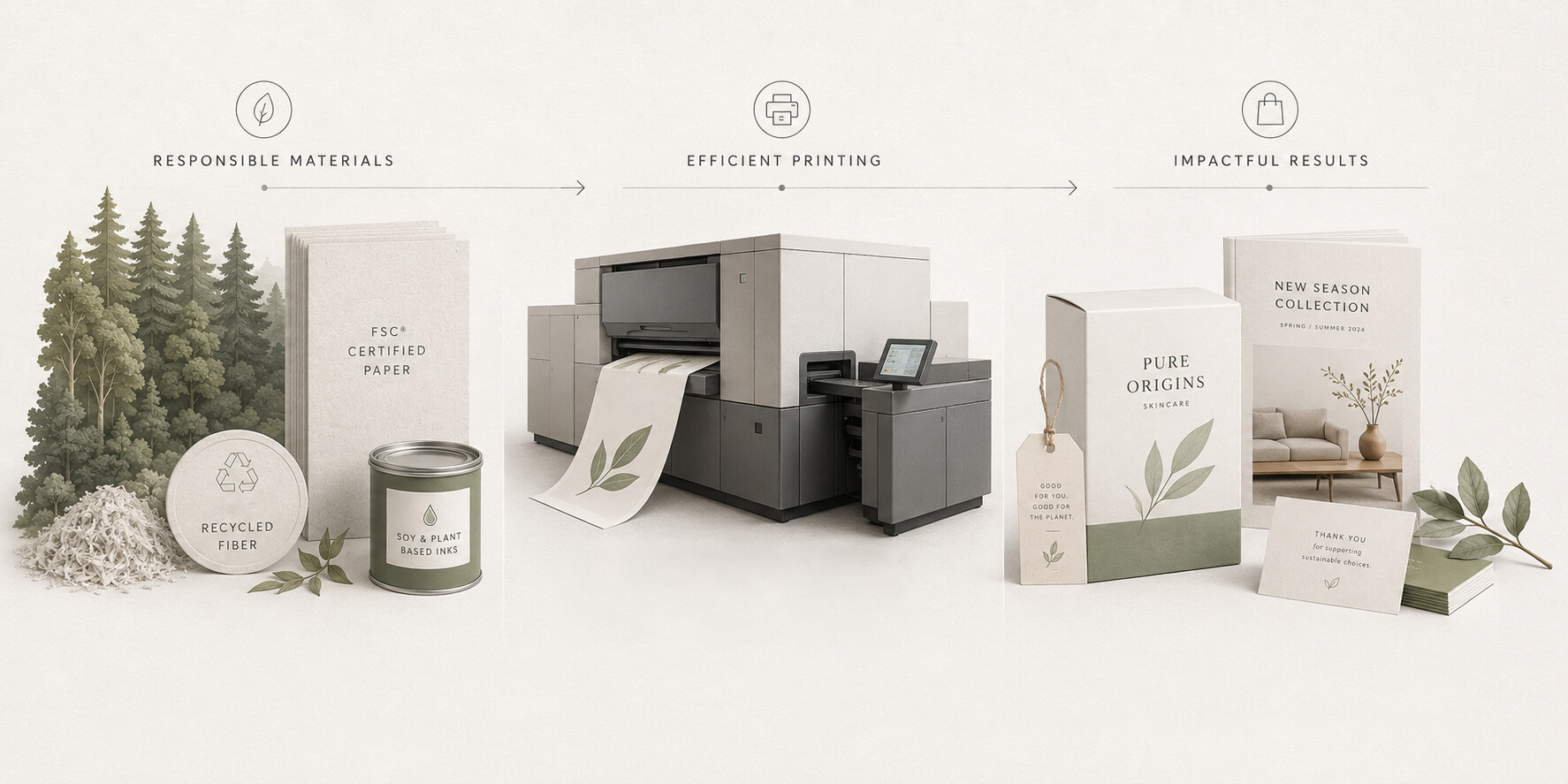
In 2026, sustainability is no longer merely an ‘option’ for brands. It’s both written into regulations and expected by customers that brands do their part to minimize wasteful and environmentally destructive practices. Failure means bad press, lost revenue, and even legal repercussions in extreme cases. That’s why top-quality commercial print and packaging providers have stepped up to overhaul their industry with significantly more sustainable practices.
In this blog, we’ll explain how today’s bold, impactful prints are better for the environment than yesteryear’s. We’ll discuss the components of a sustainable printing plan, including smart materials selection, increased process efficiency, and waste reduction. And, by the end, eco-conscious brands will have a clear picture of how prints and custom packaging fit into overarching sustainability goals.
What is Sustainable Printing?
Sustainable printing is a holistic approach to printing, where every stage and component is considered and adjusted to minimize its environmental impact. Papers, inks, finishes, print processes, equipment choices, copy counts, distribution techniques, and recycling efforts all need to be assessed to create the most sustainable prints and packaging possible.
While this represents significant effort, true sustainable printing ultimately makes excellent business sense, both for the client and the commercial printer. Reduced waste means reduced overhead. Fewer VOC emissions means safer indoor environments. And attractive, sustainable materials help a brand immediately communicate their values to an environmentally conscientious audience.
Key Components of Sustainable Printing
Next, let’s take a closer look at some of the specific elements that make up a sustainable commercial printing project.
Eco-Friendly Papers & Recycled paper
Gone are the days where eco-friendly papers were exclusively rough, brown, and naturalistic. Those papers still exist, of course, and they look beautiful in the right projects. But if that aesthetic doesn’t match your product or brand, never fear. You now have plenty of other options to choose from.
For example, today’s recycled commercial printing papers are made from a variety of post-consumer materials that offer a variety of final textures and finishes. These post-consumer materials include:
- Paper
- Cardboard
- Cotton cloth
But post-consumer recycled papers are just the start of your print substrate options. Commercial printing papers made from pre-consumer/post-industrial waste materials also abound, with fiber sources like:
- Sugarcane/Bagasse - The fibrous material left over after sugarcane processing.
- Straw - The leftover stalks of crops like wheat and oats.
- Paper Trimmings - Left overs from the paper manufacturing process
There are even sustainable paper options that don’t use recycled content at all, or blend recycled fibers with virgin fibers. These papers source their virgin material from fast growing alternative crops, like hemp or bamboo, or from forests that are certified as responsibly managed. The Forest Stewardship Council (FSC) offers a few different designations for paper products to help identify the sustainability practices followed during their manufacture, including:
- FSC 100% - Paper made from wood sourced entirely from FSC certified sources.
- FSC Recycled X% - Paper made from X% of recycled fibers.
- FSC Mix X% - Paper made from a mix of FSC certified wood, recycled materials, and/or controlled wood.
Efficient Production Processes
Another way that responsible commercial print and packaging manufacturers pursue sustainability is through innovation in equipment and print processes. For example, at Wallace Carlson, we have adopted cold foil stamping instead of the older hot foil stamping method. Switching to the cold method not only allows us to create finer details, it also requires a fraction of the energy since no heat or high pressure is required. Modern offset lithography presses also allow for fine tuning at every step in the press, allowing each run to be individually dialed in for maximum material and energy efficiency.
Waste Reduction Strategies
Historically, the biggest ecological impact from commercial printing has come from the amount of material waste it produces. Custom dies that are discarded after the run is complete. Truckloads of paper trimmings. Ink remnants and the innumerable containers they were shipped and stored in. To handle the sheer quantity and variety of materials left over after printing, commercial printers have developed multi-pronged waste reduction plans. These plans typically involve:
- Computer assisted smart layouts that maximize the number of copies produced from each sheet of paper.
- Batching multiple small projects into a single run to consolidate energy expenditure and minimize paper waste.
- Smart inventory control to prevent waste and consolidate transportation and storage costs.
How Wallace Carlson Supports Sustainable Printing
The truth is, more eco-friendly commercial printing is easy these days. All it takes is finding a printer with the right resources, skills, and sustainability practices. A partner like Wallace Carlson, for example. We regularly reflect on our processes to look for opportunities to improve energy efficiency and minimize waste. And we make certain that our sustainability-minded clients always have cost-effective, modern methods and materials to choose from, resulting in prints and packaging that are fully in line with both brand values and brand aesthetics.
Ready to start your next sustainable print project? We’d love to hear from you!
Conclusion
Work that stands out across time and industries
Looking for more insights on print marketing and design? Check out the latest blogs from Wallace Carlson for expert tips, industry trends, and strategies to elevate your brand.