Print Coatings & Finishes: How to Choose the Right Enhancement
Compare print coatings and specialty finishes including UV, lamination, foil, and embossing. Learn how to choose the right enhancement for durability and brand impact.
There are usually multiple ways you can achieve a desired print effect, with each approach varying in terms of cost, time, materials, durability, etc. It’s important to consider all the relevant factors before settling on a course.
In this blog, we’ll take a closer look at the terms associated with print coatings and finish options. We’ll break down how different types of coatings and finishes impact the physical qualities of your print. And, by the end, you will have a greater understanding of exactly which print specifications are required in order to achieve your desired final effect.
Print Coatings
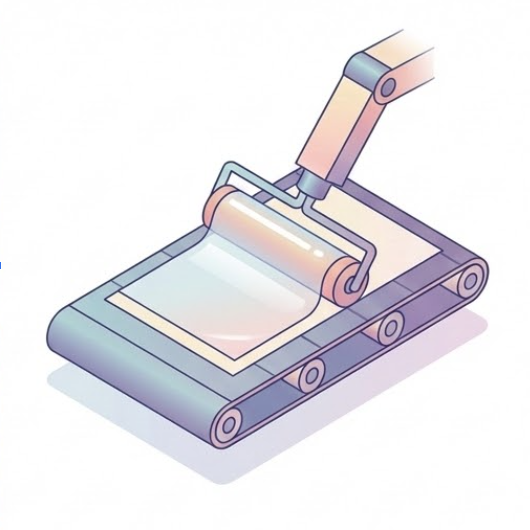
For the purposes of this primer, we’ll first look at terms associated with ‘print coatings’. These coatings are transparent treatments that can be applied from edge to edge or to select portions of a print as a liquid or film. Note that coatings can also refer to the treatments applied to paper prior to printing, but in this blog, we’re focused just on the types of coatings applied after the initial printing is complete.
Aqueous Coating
An aqueous coating is a water-based liquid that’s applied across the entire print surface. It is considered more eco-friendly than plastic films and chemical solvent-based coatings. Aqueous coatings come in a variety of finishes including matte, satin, and gloss. They are good for protecting prints from physical damage, but are vulnerable to water damage.
UV Coating
A UV coating is a chemical solvent-based liquid applied across the entire print surface. It cures instantly once UV light is applied and will not yellow over time. It’s a popular choice for protecting magazine and book covers, as it holds up extremely well against physical handling and moisture.
Spot UV
Spot UV is the same as a UV coating, just applied to select portions of a print as opposed to the entire surface. It both protects and emphasizes the portions of a print that it’s applied to.
Varnish
A varnish can be either water or chemical solvent-based. It’s applied as a liquid across either the entire print surface or to select portions of the print. Like AQ and UV coatings, varnishes pull double duty by protecting a print from scratches and scuffs while boosting aesthetics with a matte, satin, or gloss effect.
Lamination
Lamination applies a plastic film across the entire print surface. It is thicker, producing a final product that feels more robust. It also offers significantly more protection than liquid-based coatings. However, it is also considered less eco-friendly than a water-based coating. Like liquid coatings, it is available in a range of finishes including matte, satin, and gloss.
Soft Touch Coating
A liquid coating that imparts a uniquely tactile, velvety texture wherever it’s applied. Can be applied to the entire print surface or select portions. Manufactured in several different formulations including AQ and UV.
Specialty Print Finishes
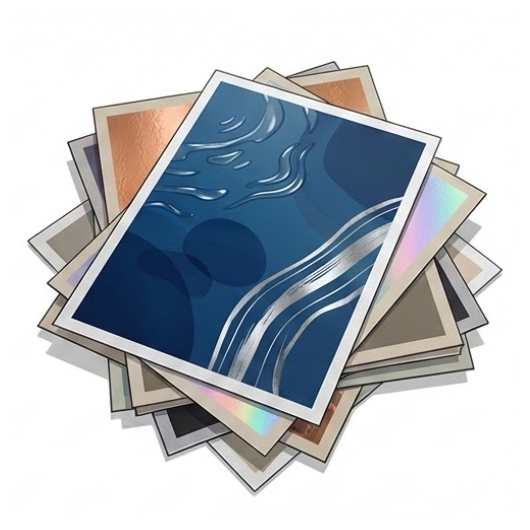
Next, we’ll break down the most common finishing options offered in commercial printing. The methods used to achieve these finishes vary substantially. Some are applied like the coatings discussed above, while others require entirely unique equipment and techniques.
Foil Stamping
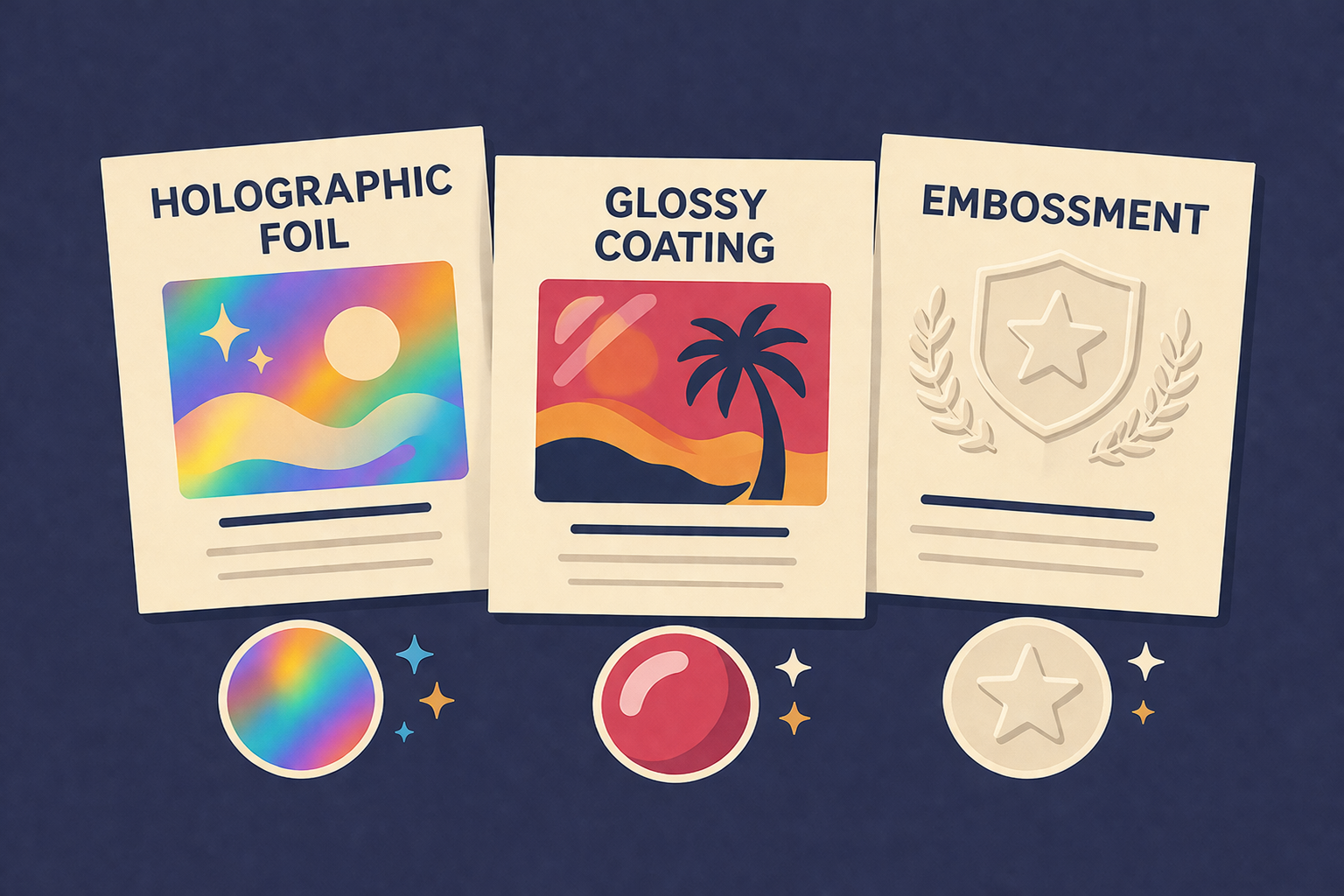
Foil stamping creates a metallic and/or holographic finish, most commonly applied to select details like titles, logos, or card backgrounds.
The term ‘stamping’ is most commonly used when referring to the older ‘hot foil’ application method, where heat and pressure are used to adhere the metallic foil to the print. However, a newer ‘cold foil’ method also exists. This method uses an UV-curable adhesive to eliminate the need for both heat and excessive pressure, improving the level of detail that can be achieved.
Embossing/Debossing
Embossing and debossing refers to raised and depressed details in the print substrate, respectively. This finishing technique requires the creation of custom dies. The dies are aligned on either side of the paper and pressure is applied to produce the three dimensional details.
Die Cutting
Die cutting is commonly used to cut out the complex flat shapes required for items that will ultimately be folded and glued into three dimensional objects, like boxes and envelopes. It can also be used to produce perforations, allowing a portion of a print to be cleanly torn off.
Edge Painting
Edge painting adds an all-over color or pattern to the cut edges of a book, boosting the visual appeal of the publication even when it’s closed. This effect requires special book edge printers, which apply quick-drying inks or varnishes while the book is firmly clamped in place.
Choosing the Right Print Finish
Choosing the right combination of finishing options for your prints requires prioritizing your goals. Your commercial print partner can also help you determine how best to achieve your desired results within your project constraints.
- Budget - When multiple finishes can achieve a similar final effect, budget may be the deciding factor between them. For example, to achieve an all-over shiny protective finish, a varnish is often going to be less expensive than an AQ or UV coating.
- Handling & Distribution - Generally speaking, a print that’s going to be sent unprotected through the mail needs to be tougher than a print that’s going to be handed over in-person. Choosing the right coatings and finishes for your distribution plans can mean the difference between a compelling sales pitch and an incomprehensible mess.
- Premium vs. Practical - As beautiful as finishes like foil are, they don’t make sense for every print job. Considering how a print will be used, how long it needs to be in circulation, and who it’s being distributed to will help you determine where your priorities should fall on the durability-to-wow-factor spectrum.
Desired Turnaround - Different finishes add variable amounts of time to the printing process. For example, an all-over UV coating applied in-line may require virtually no additional time. On the other hand, a process like embossment requires the creation of custom dies and the transfer of the prints to a separate machine after printing. The additional pre-press and print time those steps require may be significant, even impossible to accommodate if turnaround time is tight.
Conclusion
Work that stands out across time and industries
Looking for more insights on print marketing and design? Check out the latest blogs from Wallace Carlson for expert tips, industry trends, and strategies to elevate your brand.